In detail.
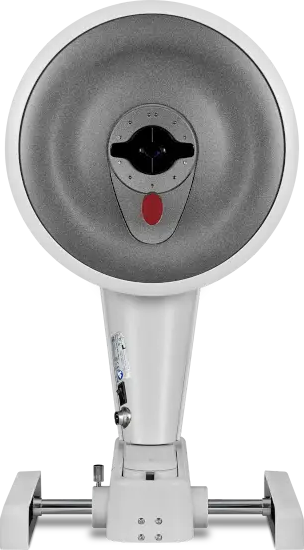
The OM-4
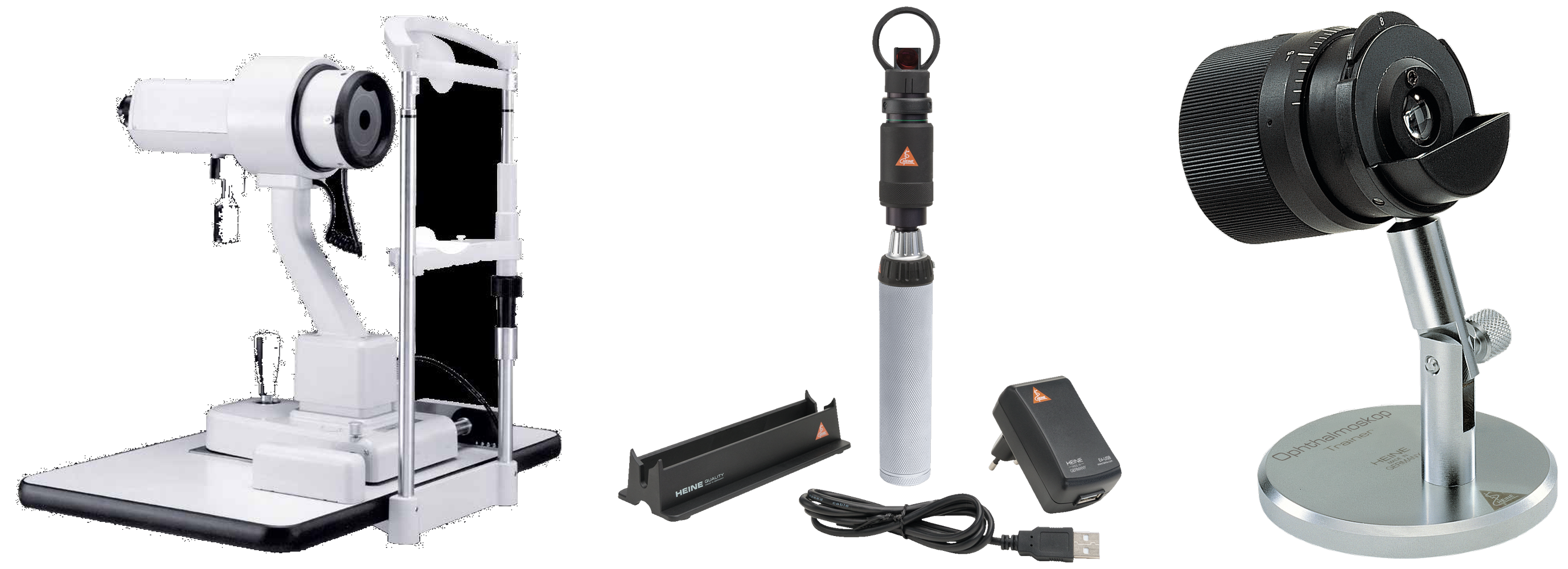
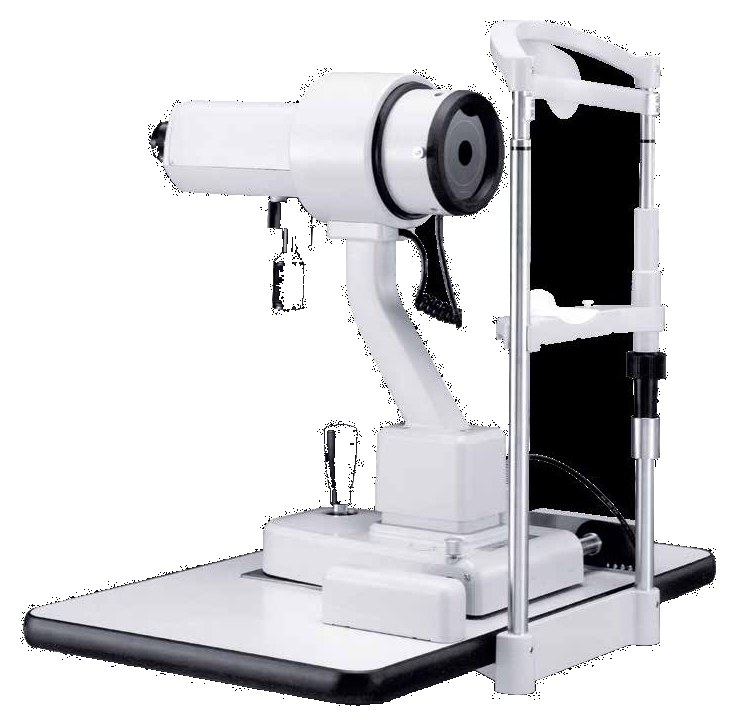
A Sutcliff-type ophthalmometer. It measures corneal radius from 5.5 to 12 mm, and corneal power from 28 to 60 D. The axis runs from 0 to 180°. The eyepiece adjusts from −5 to +5 D, for the operator’s eye. Every reading sits in one field of view, worked with one hand on the joystick.
The chin rest comes off. In its place, a column holds a contact lens: the radius is measured on the concave or the convex face, the same way as the cornea.
The Heine indirect ophthalmoscope
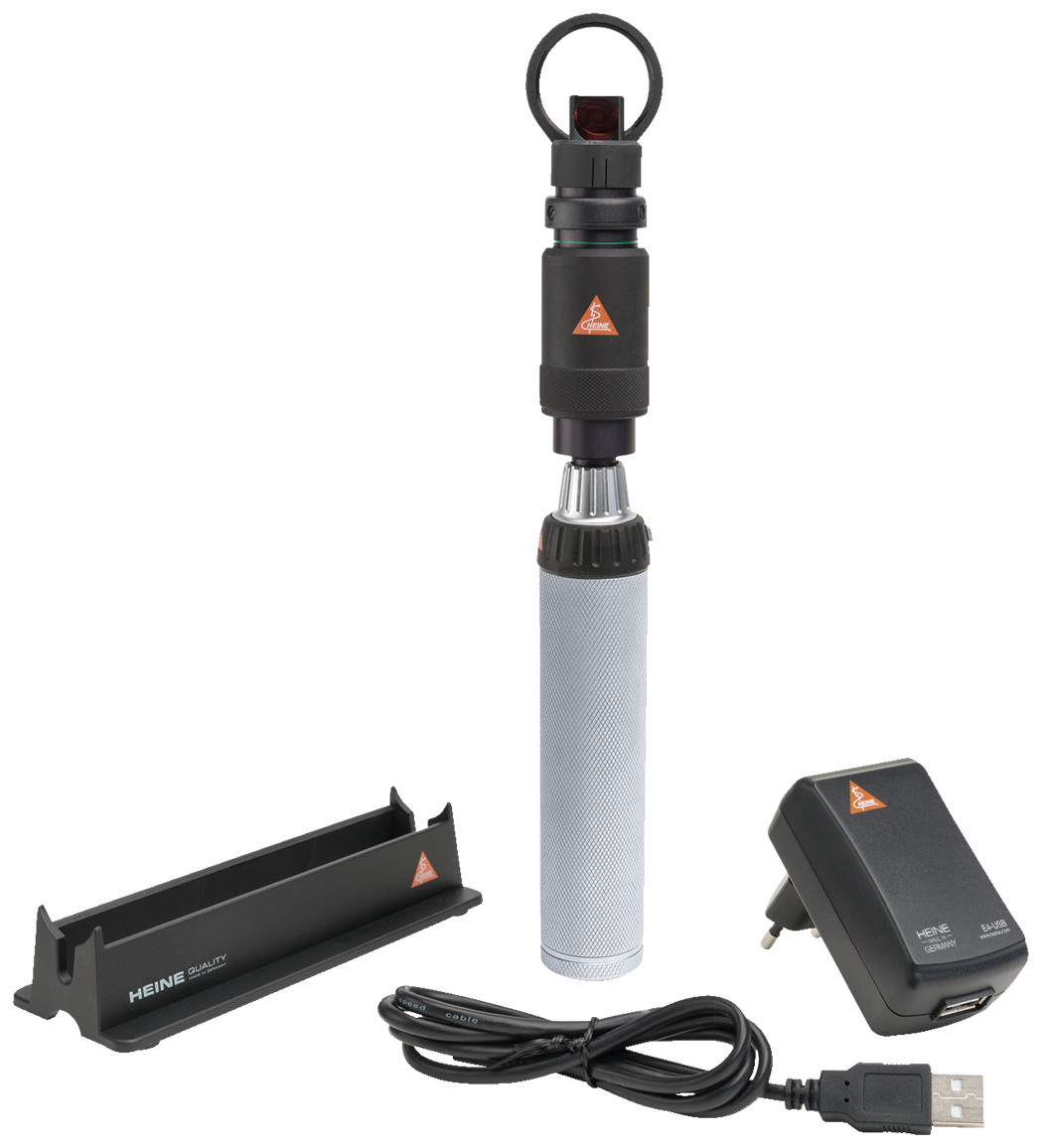
It is a Heine instrument, not a Topcon. Monocular, compact, 3.5 V, for visits and for carrying. The body is metal. The red-free filter is built in. The beam adjusts, including for a small pupil. The controls sit under the thumb.
A +3 D lens mounts on it and magnifies the image. A binocular attachment is available as an option. The instrument mounts on a Heine rechargeable handle.
The Heine simulator
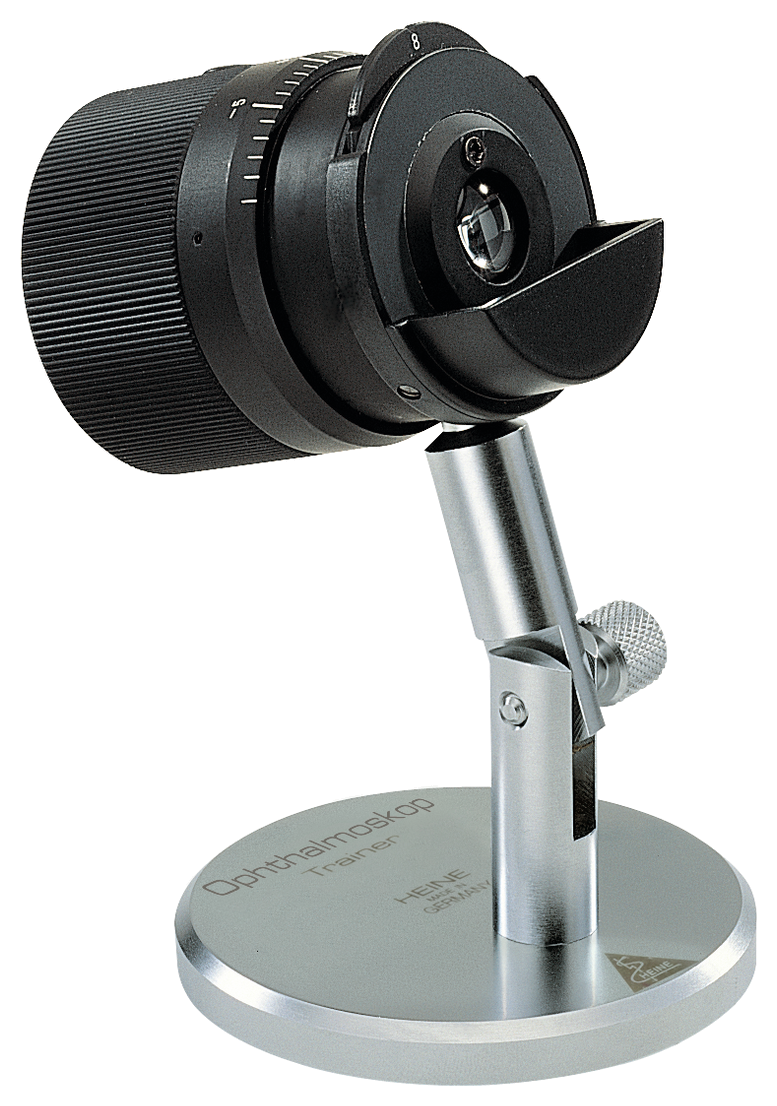
It is for learning ophthalmoscopy, direct or indirect. It is not for use on a patient, and it is not a medical device. The pupil is chosen from 2, 3, 4, 5, 6 and 8 mm. Refractive error is set on a scale. Two trial lenses can sit in front of the lens. Metal body, 600 g, adjustable angle.
Supply and follow-up
Emetrop Afrique supplies them and provides follow-up across West and Central Africa. The quote lists the instruments chosen for the room.
Specifications
OM-4: radius 5.5 to 12 mm (0.01 mm step); power 28 to 60 D (0.125 D step); axis 0 to 180° (1° step); eyepiece ±5 D; 100, 120, 220 or 240 V, 50-60 Hz, 30 W; 560 × 580 × 460 mm; 16 kg.
Ophthalmoscope: Heine, monocular, 3.5 V; red-free filter; +3 D lens; coated optical glass.
Simulator: Heine; pupils 2, 3, 4, 5, 6 and 8 mm; lens f = 18 mm; 600 g.